How To Get Fuller Thicker Brows Fast
We may earn commission from links on this page, but we only recommend products we love. Promise. You can read full disclosure here.
If you plucked your brows thin at some point, you probably remember the moment you decided to let them grow back. You put the tweezers in a drawer, braced yourself for a few awkward weeks, and waited. Then a month went by. Then two. The gaps are still there, a few stubborn hairs have appeared in odd places, and you are starting to wonder whether your brows will ever come back the way they were.
That frustration is normal, and it is mostly a timing problem. This guide walks through what is really going on under the skin, what research says about the options women reach for, and when thinning brows are a reason to see a doctor instead of buying another product.
Why Your Brows Take Months to Grow Back
Every brow hair goes through the same cycle: a growing phase, a short transition, and a resting phase before it sheds and a new hair starts. The difference between brows and the hair on your head is the length of that growing phase. Scalp hair can keep growing for years. Brow hairs grow for only a few months, which is why they stop at a short length, and then spend a long stretch resting.
That has two practical consequences. First, when you pull a hair out, the replacement does not show up the next week. It has to wait for its follicle to start a new cycle, and that often takes months. Second, if you judge your progress after four or six weeks, you are judging far too early. A realistic window for seeing a real difference is three to four months, and for brows that were heavily overplucked for years, it can take longer.
There is also a harder truth. Plucking the same spot again and again over many years can damage the follicle, and some of those hairs may never come back. If one area has stayed completely bare for a year or more while the rest of the brow has filled in, that is often the reason, and it changes which options make sense for you.
Popular Fixes
Here is how the usual remedies compare when you look at the evidence rather than the before-and-after photos.
1. Minoxidil
Minoxidil is the same active ingredient used for thinning scalp hair, and it has been tested on brows in small clinical trials. In a 2023 randomized study of 60 women with thin brows, a 2% minoxidil solution applied once a day for 16 weeks improved brow density, and so did bimatoprost, with no significant difference between the groups.
An earlier split-face study comparing 3% minoxidil and bimatoprost found similar results. The catch is that this is a drug, it needs daily use, and it can irritate the skin. It is a conversation to have with a dermatologist, not something to dab on based on a social media video.
2. Prostaglandin-Based Treatments
Bimatoprost is a prostaglandin analogue, meaning it mimics the action of naturally occurring prostaglandins in the body. It is the active ingredient in a prescription treatment for eyelash growth, but some dermatologists also use it off-label to encourage eyebrow growth. It works by influencing the hair growth cycle, helping hairs stay in the growing phase for longer. In the study mentioned earlier, it performed about as well as minoxidil.
Possible side effects include itching, redness and darkening of the skin around the application area. If a dermatologist recommends it, follow their instructions carefully.
3. Castor Oil and Petroleum Jelly
Castor oil is one of the most popular home remedies for fuller brows, but despite its popularity, there is little clinical evidence to support claims that it stimulates eyebrow growth. But tell that to beauty gurus! They’ll swear castor oil is the secret to fuller brows.
Castor oil and petroleum jelly work by coating and conditioning existing brow hairs, helping reduce dryness and breakage. This can make your brows appear glossier, healthier and slightly fuller, but it doesn’t stimulate new hair growth.
4. Biotin and Other Supplements
Biotin is everywhere in the hair aisle, but it only helps if you are actually low in it, and true deficiency is rare. High doses can also interfere with some blood tests, so tell your doctor if you take it.
Iron supplements on the other hand, is a different case. Low iron is a common cause of hair shedding, especially in women with heavy periods, and fixing a real deficiency can make a noticeable difference. A simple blood test will tell you, so test before you supplement.
5. Brow Serums
Cosmetic brow serums sit somewhere between the drugstore oils and the prescription treatments. They are designed to condition the brows and help them look fuller, and they are easy to build into a nightly routine. Think of them as a supporting step, not a replacement for patience or medical advice.
If you decide to try one, a few rules make the difference between giving it a fair trial and giving up too early. Apply it to clean, dry brows once a night, in a thin line rather than a thick layer. Patch test on your inner arm for a couple of days first, especially if your skin reacts easily. And give it at least two to three months, because of that slow brow cycle, before you decide whether it is working.
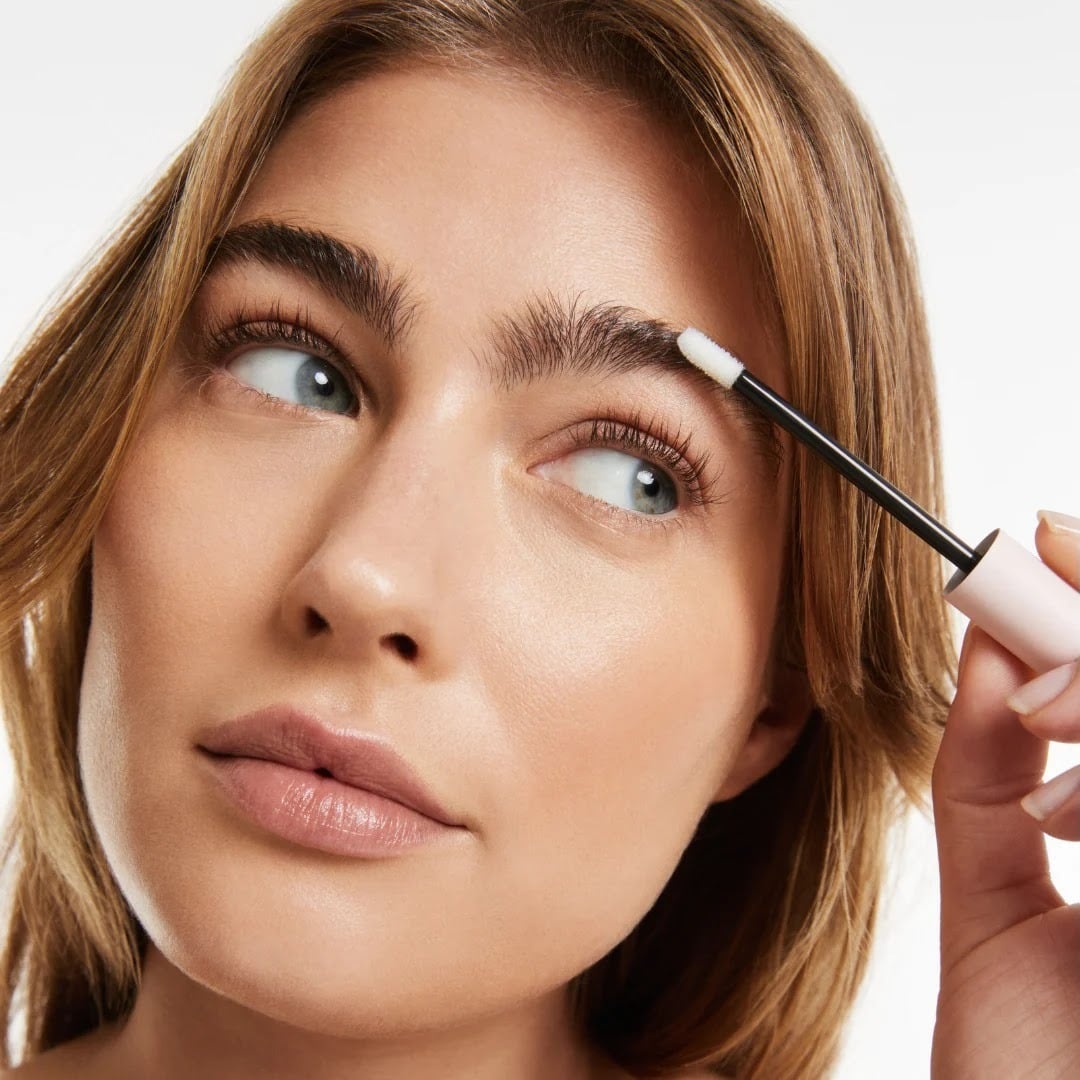
For an easy addition to your nightly routine, try the Smooche Eyebrow Serum. Simply apply it to clean brows before bed. The formula is also labelled hormone-free. Whichever serum you choose, take a photo of your bare brows in the same daylight every two weeks. You look at your face too often to notice slow change in the mirror.
Not All Eyebrow Thinning Is Caused by Overplucking
Not all thinning comes from tweezers. Some patterns are worth mentioning to a doctor before you spend money on anything.
If the outer third of your brows has been getting thinner without any plucking, and you also feel unusually tired, cold or sluggish, ask about a thyroid check.
Thinning at the tail of the brow is a well-known sign of an underactive thyroid. Round, smooth bald patches that appear suddenly can point to alopecia areata, which a dermatologist can treat.
Redness, flaking or itching around the brows may be dermatitis rather than a hair problem at all. And if you notice that you pull at your brow hairs without really meaning to, especially when stressed or concentrating, you are far from alone, and a doctor or therapist can help with that too.
How to Make Your Brows Look Fuller During Regrowth
The regrowth stage is the hardest part, because you are leaving hairs alone that you might usually be tempted to pluck. Tinting is the easiest way through it. A professional brow tint darkens the fine, pale hairs that are already there, and many people are surprised by how much fuller their brows look once those hairs show up.
If you have bare patches that have not changed in over a year, microblading or a similar semi-permanent technique is the most realistic option. Choose an experienced, licensed artist, look at healed results rather than fresh ones, and expect the color to fade over one to three years.
Your Next Steps for Fuller, Healthier Brows
Put the tweezers away for at least three months, removing only obvious stray hairs beneath your brows. Rule out any underlying medical causes if your symptoms suggest them. Choose one approach, whether that is a cosmetic serum, a conversation with a dermatologist about minoxidil, or a tint to get you through the awkward stage, and stick with it long enough to judge it fairly.
Take your photos, and be kind to yourself in the meantime. Brows come back slowly, but for most people they do come back.