









In cultural conversations, dark feminine energy is often framed as an aesthetic or a personality type.
In practice, it functions more as a response to social expectations placed on femininity, particularly the expectation to be accessible, agreeable, and emotionally transparent. These dark feminine energy traits tend to emerge where restraint, selectivity, and self-governance replace performance.
Dark feminine energy usually shows up after someone stops performing femininity for approval. It’s less about being soft or nice and more about being selective, self possessed, and comfortable with not being universally liked.
These dark feminine energy traits tend to develop over time, not overnight.
You May Also Like : Which Characteristics of Light Feminine Energy Do You Have?
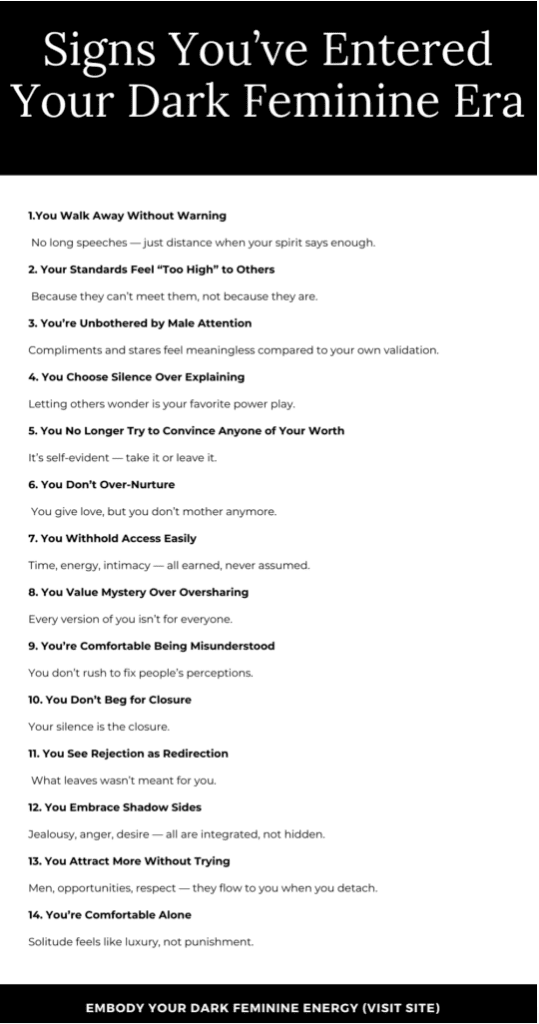
1. You keep your emotional life private
You don’t externalize your emotions in order to regulate it. Feelings are processed internally first, which means fewer impulsive reactions and fewer emotional disclosures done for relief.
2. You are strict on who has access to you
Availability is not something you debate or explain. You decide who gets time, attention, and emotional presence based on behavior, not potential. When conditions change, access changes with them.
3. You trust your perception without seeking confirmation
Your read on people doesn’t need to be validated by reassurance or explanation. When behavior contradicts words, behavior wins. You don’t argue with your own perception to preserve the connection.
4. You enforce boundaries through behavior
When dynamics become unclear, disrespectful, or unbalanced, you reduce participation rather than increasing effort. You don’t seek clarity from people who benefit from ambiguity. Withdrawal is a decision you make for your self respect.
5. You regulate your difficult emotions before acting out
Emotional control is much different from suppression; it’s sequencing. You feel first, then decide. This prevents others from accessing you through provocation or emotional leverage.
Watch this video on how you can learn to control your emotions
6. You stop being responsible for other people
You don’t rush to smooth tension, fill silence, or manage other people’s discomfort. Emotional responsibility is not automatically assumed. This shifts power by refusing unpaid emotional labor.
7. You allow desire to exist without pursuing it
Attraction doesn’t automatically translate into taking action. You let interest develop or die based on reciprocity. Wanting something does not override self-respect or leverage.
8. You are unbothered by male attention
Interest, validation, or pursuit are not used to measure your worth. This removes others’ ability to reward or punish you through attention. Power dynamics shifts when nothing external is needed to feel whole.
Watch this if you need convincing on why you should decenter men.
9. You can walk away without needing closure
You don’t require resolution, explanations, or emotional reconciliation to leave. If a situation no longer aligns, exit is clean and final. The ability to leave without repair attempts is one of your strongest forms of leverage.
10. You’re comfortable being misunderstood or disliked
You don’t expend energy correcting every misinterpretation. If someone projects onto you or forms an opinion without context, you let it stand. You don’t attempt to manage other people’s perception of you.
Being misunderstood doesn’t feel like a threat because approval isn’t required to trust yourself.
You are neutral to someone not liking you, because you don’t see it as a personal failure. This removes other people’s ability to pressure you into over explaining yourself, softening your boundaries, or reshaping yourself for acceptance.
By refusing to over-clarify, you stay in control of your narrative.


Comments +