
Think You Have Cortisol Moon Face? Here’s How To Fix It
We may earn commission from links on this page, but we only recommend products we love. Promise. You can read full disclosure here.
As women, we literally carry the world on our shoulders.
Society places this heavy burden on us to take care of everyone except ourselves.
We are expected to go to school, attend countless lectures, complete assignments, stay at the top of the class, graduate, get a job, meet deadlines, and sometimes get a second job because the economy is not smiling.
Then there is starting a side hustle, dealing with heartbreaks, betrayal, career struggles, and paying never-ending bills.
We still have to cook, clean, take care of our family and friends, and be the unpaid nanny and therapist, all while being expected to look skinny, have clear skin, and basically meet unrealistic beauty standards. Oh, and we are supposed to do all this with little to no help.
It is honestly exhausting.
We are not just trying to survive adulthood (which we are barely surviving, by the way). We are also navigating womanhood. Like, we are literally expected to show up at work and carry on with our daily responsibilities while bleeding and dealing with cramps that feel like they are trying to take us out.
That’s crazy.
And with all the stress many women deal with daily, it’s no wonder we feel overwhelmed, emotionally drained, suffer hormonal imbalances, and get the famous cortisol face.
Now, what is cortisol face? It is a puffy or rounded-looking moon face that is associated with high cortisol levels. A lot of times, it can also be accompanied by stress acne, rough skin, inflammation, and redness.
One thing that really gets under my skin when it comes to advice on reducing cortisol is when people say, “Just reduce your stress.”
Don’t we all wish it were that easy? It’s not like stress is a switch we can simply turn off whenever we want.
Unfortunately, women often get this advice, and it can be frustratingly vague because many of the things stressing us out aren’t optional. We can’t always quit our jobs, stop paying bills, abandon our responsibilities, or magically make our problems disappear.
As a first daughter who has dealt with a lot of stress for much of my life and once had a cortisol face, I understand how frustrating it can be to look for answers.
That’s why I’m sharing practical steps to get rid of cortisol face, reduce stress, and improve your overall well-being.
Let’s get right into it.
1. Avoid Checking Your Phone For The First 30 Minutes After Waking Up

Credit: fridacashflow
You know how you wake up, reach for your phone, and suddenly you are checking WhatsApp messages, replying to emails, scrolling through social media, and worrying about things you haven’t even had breakfast for? Yeah, let’s talk about that.
Checking your phone immediately after waking up can expose you to notifications, stressful news, work demands, and social media content before you have had a chance to ease into your day. This can make you feel mentally overwhelmed before your day has even properly started.
Instead, give yourself the first 30 minutes of the morning to wake up without distractions. Read, stretch, ask your partner if they would still love you if you were a fly, feed your pets, get some sunlight, or enjoy a few quiet moments before getting into the demands of the day.
I used to be guilty of this, too. I would wake up in the morning, and the first thing I would do was pick up my phone. I didn’t even know if my eyes were fully open before I reached for it because my phone was right beside my bed.
Until I realized how much this habit was affecting my mornings and adding to my stress levels.
One of the ways I was able to break this habit was by keeping my phone in the sitting room.
Instead of scrolling first thing in the morning, I would journal for about 10–15 minutes and then walk my dog. This is one of the most underrated glow-up habits that completely changed my life for the better.
2. Avoid Drinking Coffee On An Empty Stomach

Credit: juliasokele
As someone with insanely busy mornings, coffee was my breakfast because I used to think it gave me the strength to power through my schedule. But let me tell you, it’s so, so bad for your body.
If I’m allowed to give you just one piece of advice on how to fix cortisol face, it is to eat a healthy breakfast and drink water before coffee or other caffeinated drinks hit your system. Trust me, starting your day with a proper meal can help you feel more nourished and energized.
You see, in the mornings, your cortisol levels are at their highest to help you wake up and get ready for the day.
So, adding coffee or caffeine without any food to level it out or balance it is a sure way to put your body under a lot of physical stress, which can leave you in fight-or-flight mode.
Trust me, it is no fun at all! I remember feeling jittery at times, with my body suffering from what was adrenal overload.
So, skip the caffeine for at least 90 minutes and eat before you finally drink one.
3. Get Sunlight Within The First Hour Of Waking Up

Credit: elenaweisss
One of the cheapest tips I will be sharing with you on how to lower cortisol levels naturally is to get sunlight within the first hour of waking up. And yes, cloudy weather counts, too.
One of my favorite ways to do this is by taking a walk or walking my dog every morning. It is super easy, requires very little effort, and doesn’t feel stressful at all.
You see, getting natural light in the morning helps regulate your body’s internal clock, also known as your circadian rhythm. This rhythm influences your sleep-wake cycle and helps regulate the natural daily pattern of cortisol production.
Morning light also signals to your brain that it’s time to wake up, helping you feel more alert during the day and supporting better sleep at night.
Just step outside, take a short walk, run, or sit on your balcony, enjoy your morning drink outdoors, water your plants, or simply spend a few minutes enjoying the fresh air.
The goal is to get natural daylight into your morning routine, so find something that works for you and stick with it.
But in all you do, ladies, don’t forget your sunscreen.
4. Incorporate Low-Impact Workouts To Your Routine
Credit: fabianaacali
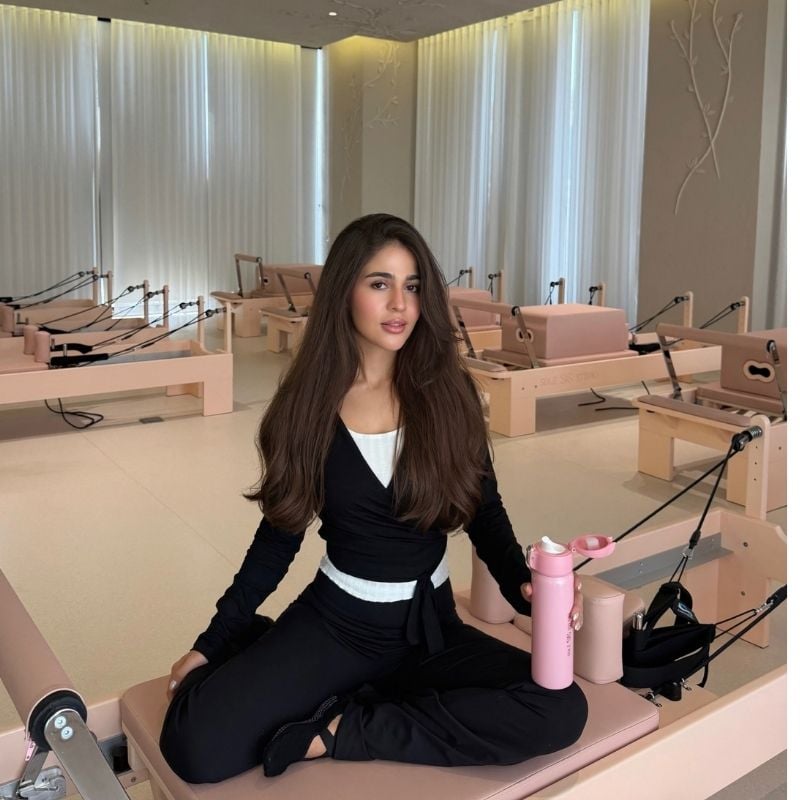
You need to incorporate low-impact exercises into your routine if you want to lower cortisol levels naturally.
Sometimes, all your body needs is a little movement. Walking, Pilates, and yoga are great options to try out. Also, I noticed that I actually lost more weight and achieved a slimmer figure when I started walking more and doing Pilates.
One thing I want you to understand is that exercise shouldn’t become a thing that stresses you out.
On days when you have plenty of energy, you can go for a longer walk or do a Pilates session. But when you are exhausted, dealing with period cramps, or just not feeling up to it, please take it easy. A gentle walk or a few minutes of stretching is perfectly fine, too.
You can also adjust your workouts according to how you feel during your menstrual cycle.
Your hormones fluctuate throughout the month, and you tend to notice changes in your energy levels, strength, and exercise tolerance during different phases of your cycle.
Here is how you can approach movement during each phase:
- Menstrual Phase (Approximately Days 1–5)
This is when you have your period. You might experience cramps, fatigue, or lower energy levels, although this isn’t the case for everyone.
If you’re feeling drained, try gentle walking, restorative yoga, or light stretching. If you prefer strength training, you can reduce the weight you carry, use smaller weights, and take a rest day when needed. There is absolutely no need to force yourself through an intense workout when you are uncomfortable.
- Follicular Phase (From the Start of Your Period Until Ovulation)
During this phase, estrogen gradually rises. You might notice that you have more energy and feel ready to challenge yourself.
If you are feeling good, this can be a great time to try strength training, running, Pilates, or a more challenging workout. Again, listen to your body and increase the intensity when it feels right.
- Ovulation (Around the Middle of Your Cycle)
Estrogen peaks shortly before ovulation, and some women notice increased energy or strength around this time.
If you’re feeling energetic, you can enjoy your usual strength-training routine, running, or a challenging cardio class. However, you don’t have to push yourself to maximum intensity just because you are ovulating.
- Luteal Phase (After Ovulation Until Your Next Period)
During this phase, progesterone rises, and you might notice changes in your energy levels, sleep, or mood. You might also experience PMS symptoms as your period approaches.
If your energy dips, consider moderate-intensity exercise, swimming, Pilates, walking, or lighter strength-training sessions.
Read More: Cycle Syncing 101: You’re Not Lazy, You’re Out of Sync
5. Stretch Before Bed To Relax Your Body

Credit: laistaboza
My best friend actually put me onto this, and now I don’t go to sleep without stretching.
Because I’m constantly stressed, my mind is always racing, which makes it difficult to fall asleep. I’m lying in bed, but my brain? It is busy worrying about tomorrow’s responsibilities, replaying events that happened in the day, or remembering embarrassing things I did five years ago.
But stretching before bed has become one of the little things that helps me unwind.
Gentle stretches can help release muscle tension and give you a chance to slow down after a long, stressful day. And when you combine them with slow, deep breathing, they can become a relaxing bedtime ritual that helps prepare you for sleep.
Oh, if you want to take it up a notch, add some chamomile tea to your bedtime routine. It’s so, so soothing: You are going to find yourself drifting off to sleep in a flash.
It is not complicated at all; just a few gentle neck rolls, shoulder stretches, a child’s pose, or a hamstring stretch will do the trick.
And no, you don’t need to spend 30 minutes doing this; five to ten minutes is more than enough, honestly.
Read More: 12 Hip Opening Yoga Poses To Release Trauma and Stress
6. Practice Breathing Exercises, Meditation, and Relaxation Techniques
Credit: cassandrebailo
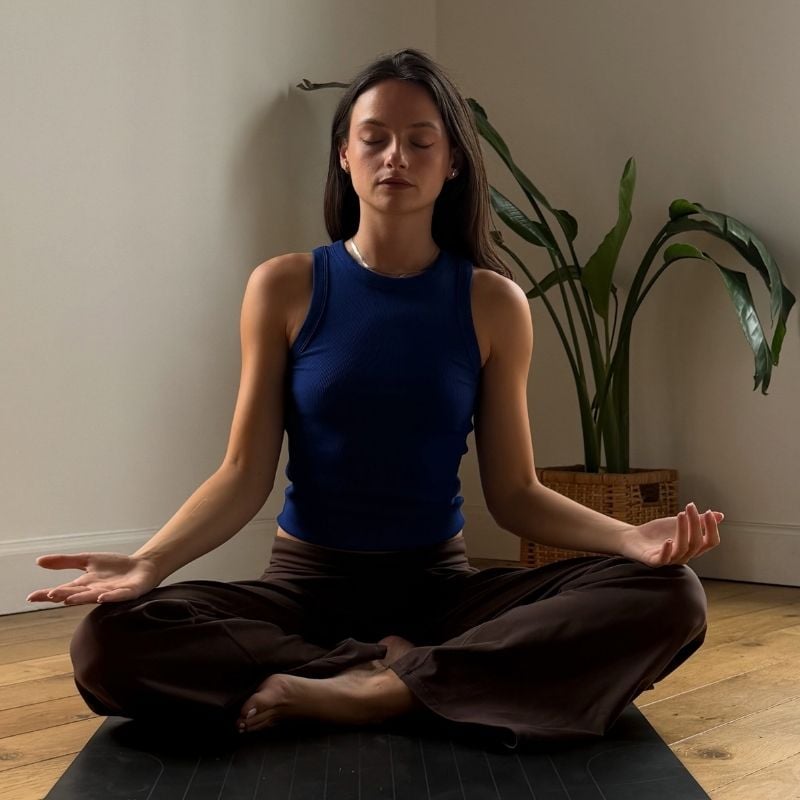
If you wake me up in the middle of the night and ask me how to decrease cortisol levels, my first answer will be to practice meditation, gentle breathing, and relaxation techniques.
They work like magic. I cannot emphasize how effective they can be at helping me calm down when my mind is racing and I’m feeling overwhelmed.
One technique you can try is the 4-7-8 breathing method. Inhale gently through your nose for four seconds, hold your breath for seven seconds, and exhale slowly for eight seconds.
You can also incorporate meditation and mindfulness into your daily life. Sometimes, we are so caught up thinking about everything we need to do, everything that has gone wrong, and everything that could go wrong that we barely give ourselves a moment to breathe.
Meditation helps you create that moment. You can start with just five minutes a day, focusing on your breathing and gently bringing your attention back whenever your mind wanders.
Another technique you can try is havening, which involves gentle, repetitive touch, such as stroking your arms or palms, as a relaxation practice.
I find this not only relaxing but also reassuring. As someone who struggles with anxiety, whenever I start panicking or worrying, I stroke my arms and tell myself, “It’s okay, you will be fine,” or “You are doing great.”
It’s so comforting! It makes me feel safe, helps me relax, and calms me down whenever my heart starts racing.
You can do it for one to five minutes, whenever you feel overwhelmed or simply need a moment to yourself.
Another thing I do is thymus breathing. I press gently on my chest with my fingers, breathe in slowly, and open my mouth as I exhale. I repeat this three to five times.
This actually makes me yawn a lot, and I love it.
7. Eat Magnesium-Rich Foods Or Take Supplements
Credit: eviemaeats
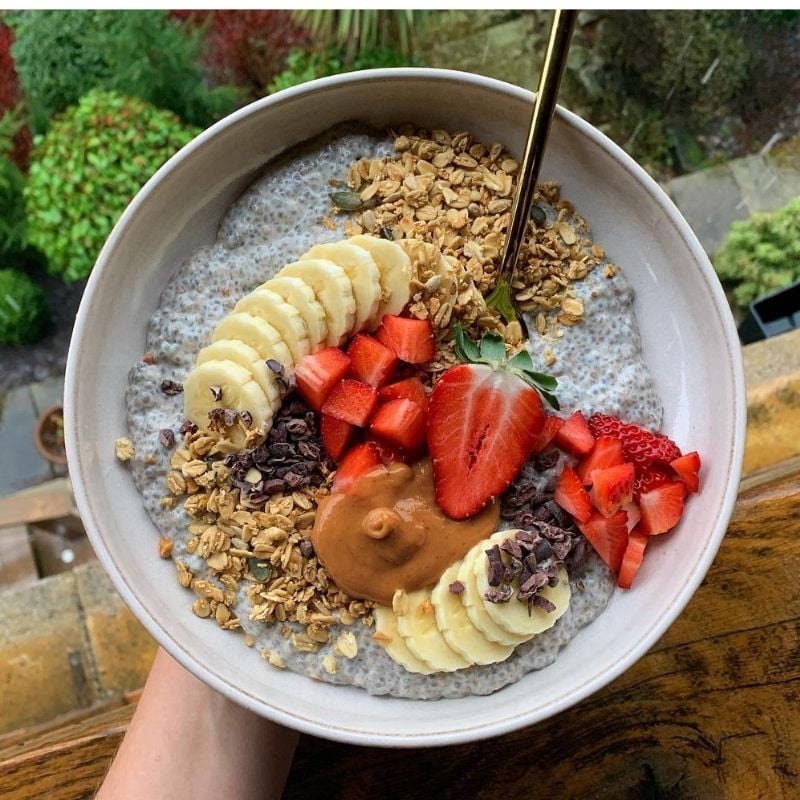
We cannot talk about getting rid of cortisol face without mentioning diet, but not just any diet, one rich in magnesium.
Examples include kale, pumpkin seeds, spinach, almonds, brown rice, salmon, cashews, avocado, black beans, dark chocolate, bananas, etc.
Your body needs magnesium to keep your stress levels under control. Let me explain how this works. You see, most times, we as women are not getting enough magnesium, and basically, what happens when you are magnesium-deficient is that your cortisol levels spike up.
And what do you do when you are stressed? You want to eat. It’s called binge eating, so you crave sweets, salty foods, and oily foods: you know, the quick energy sources. These might feel comforting at the moment because of the dopamine hit; eating too much of these foods is technically bad for you.
So, eating magnesium-rich foods will help you lower your cortisol levels, which will, in turn, help you lose weight because you are not overconsuming or snacking so much.
Another way you can get magnesium is through supplements. My doctor recommended a magnesium glycinate supplement to me because it’s better absorbed and more relaxing. It has been shown that magnesium helps lower cortisol at night, so you should take this supplement at night, preferably after dinner.
In case you are currently taking medication or have an underlying health condition, please speak to your doctor before starting this supplement.
8. Eat A Balanced, Protein-Rich Breakfast With Healthy Fats
Credit: foodbyyjudith
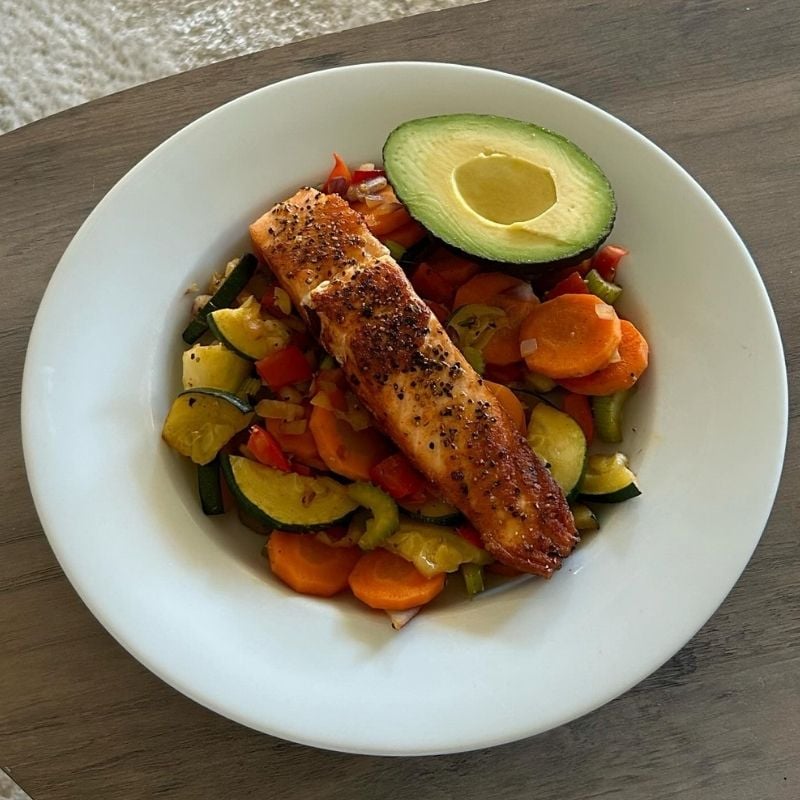
Let me share with you my secret on how to reduce cortisol belly fat: eat a high-protein breakfast that contains healthy fats and carbohydrates. Think eggs and avocado on whole-grain toast, chicken with brown rice and spinach, or scrambled eggs with whole-wheat bread. You get the picture!
These meals provide nutrients that help keep you nourished and energized throughout the morning, which can help prevent you from getting too hungry and snacking on sweets or eating the next available fast food.
Protein helps build and repair your body tissues and keeps you feeling full, while healthy fats support hormone production and help your body absorb certain vitamins. Adding carbohydrates also provides energy and helps you maintain a balanced diet.
Another thing you need to stop doing is skipping meals.
EAT YOUR GODAMN FOOD.
I know life gets busy, and sometimes you have so much to do that eating becomes the last thing on your mind.
But going for long periods without eating can leave you feeling hungry, tired, and more likely to reach for convenient snacks when hunger finally catches up with you.
Seriously, not eating won’t necessarily help you lose weight. You may only end up putting your body under more stress.
Food is not the enemy; what you need is portion control and a well-balanced diet. The time of my life when I looked the biggest because of inflammation and water retention was when I was overworking my body and underfeeding it. I would literally skip breakfast and lunch and eat a 700-calorie dinner.
This is not me telling you to stuff your face; all I’m saying is eat a healthy and highly nutritious meal three times a day.
What you don’t realize is that when you starve, underfeed, and overwork your body, you are actively pushing yourself towards adrenal overload.
This is a great tip on how to look pretty too.
9. Reduce Added Sugar And Choose Whole Fruits

Credit: loelia_mn
As someone with a sweet tooth, especially during my period, whole fruits changed the game for me.
It is safe to say that, at some point, I had a sugar addiction because I couldn’t go a whole day without some fudgy hot doughnuts, glazed soft cinnamon buns, ice cream, or chocolate-filled pastries.
And don’t get me started on sugary drinks. If I didn’t get my fix for the day, I would be cranky as hell.
Y’all, when I tell you my body was protesting, I mean it. I was dealing with irritation and recurring acne, and my face was also a puffy mess: the classic cortisol face. And guess what? I had a very good skincare routine, so I was confused about why I kept getting flare-ups.
My energy levels also seemed to drop, except when I ate something sugary. It was a hot mess!
Until my doctor advised me to go sugar-free for a month. But, babes, it was HELL!!!!!. I felt like I was about to lose it, especially whenever I passed by my favorite bakery and saw those delicious, warm, sugary, buttery pastries that I couldn’t lay my hands on.
I remember calling my doctor in tears, and she recommended whole fruits instead.
So, I started eating mangoes, blueberries, strawberries, grapes, pineapples, watermelon, apples, oranges, bananas, and whatever other fruits I could get my hands on.
And honestly, I loved them because they were naturally sweet, too. It felt like a two-in-one package deal: something sweet to satisfy my cravings while still giving my body beneficial nutrients and fiber.
Gradually, I found it easier to manage my cravings and reduce how much added sugar I was consuming. I noticed so many improvements in my skin, and my facial puffiness also reduced drastically.
10. Include Nutritious Foods And Healthy Fats In Your Diet
Ladies, you need to include more nutrient-rich foods in your diet, such as eggs, edamame, kale, avocados, nuts, seeds, and oily fish like salmon.
These foods provide essential nutrients that support your overall health. Eggs and edamame provide protein, while avocados, nuts, and seeds contain healthy fats that help your body absorb certain vitamins and support normal hormone function.
Now, let’s talk about fermented foods. I’m talking about yogurt, pickles, kimchi, or sauerkraut. These foods contain probiotics, which help to balance your gut microbiome. They can also add flavor and variety to your meals, so it’s a win-win!
Why should you care? Your gut plays an important role in digestion, skin health, and basically your overall health.
When you have poor gut health, it can manifest itself as higher stress levels and an inflamed, irritated, puffy cortisol face.
So, when you add nutrient-dense and fermented foods to your diet, you are supporting your gut health, which helps to lower stress responses and, in turn, leads to lower cortisol levels.
11. Pay Attention To How Your Body Responds To Different Foods
Please, please, and please, for the love of God, always listen to your body.
Pay attention to how your body responds to different foods. Notice how you feel after eating certain meals, what keeps you satisfied, and what leaves you feeling uncomfortable. We are all different, and what works for one person might not work for you.
Eat balanced meals, nourish your body, and please, don’t eat to the point of discomfort just because the food tastes so good.
You can enjoy your favorite meals without needing to finish everything on your plate when you are already full.
And please, don’t fall for every detox diet you see online. A lot of people tell lies online for engagement and vIews and that sweet social media money. I bet you, 90% of them don’t practice what they preach.
You don’t need to starve yourself, drink strange concoctions, or go on an extreme cleanse to regulate cortisol. Your body already has organs, like your liver and kidneys, that help process and eliminate waste.
12. Aim For 8–9 Hours Of Sleep Each Night
Credit: sarah.bellingway
If I catch any of you not sleeping by 10 p.m., we are going to have a problem.
Girl, YOU. NEED. TO. SLEEP.
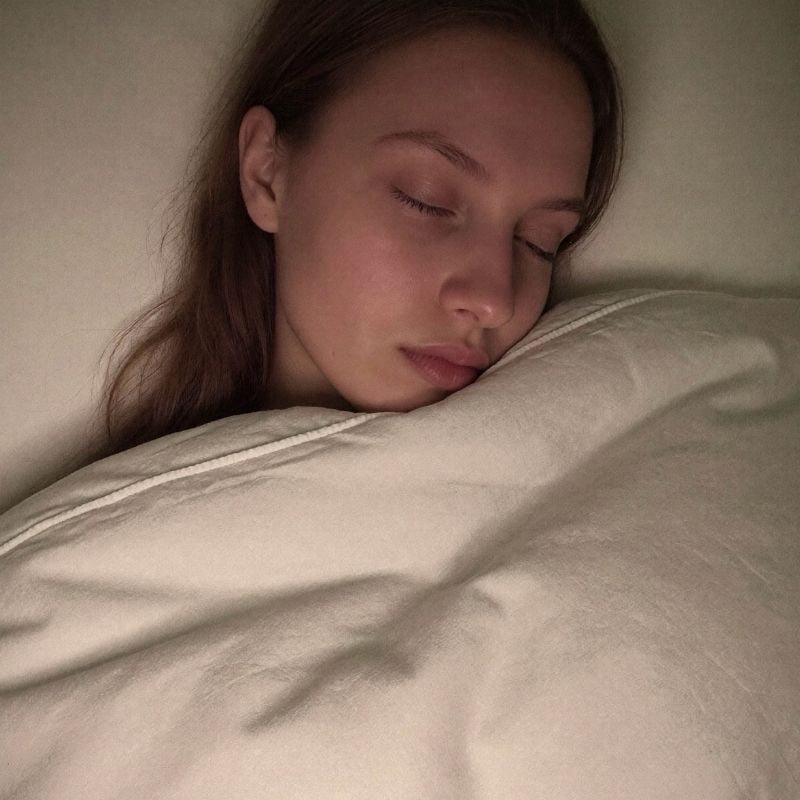
Your body needs it, your skin needs it, and even your mind needs it. You should be getting 8–9 hours of sleep every night, as sleep deprivation can lead to higher cortisol levels, especially in the evening.
So, here are a few tips to help you sleep better.
- First, establish a sleep schedule where you go to bed and wake up at the same time every day for a few weeks to help regulate your sleep routine.
- Next, quiet your mind at night by staying away from screens, whether that’s scrolling through your phone or watching an intense show.
- Instead, try reading a book (this one works like magic for me), solving a puzzle, or counting from 1 to 20 and repeating until you fall asleep.
13. Consider Green Tea As An Alternative To Coffee To Reduce Your Overall Caffeine Intake.

Credit: teatime_with_charlotte
Instead of reaching for coffee every time you need a little energy boost, why not switch things up with green tea instead?
Green tea contains caffeine, but generally less than coffee, so it can be a good alternative if you are trying to reduce your overall caffeine intake. It also contains L-theanine, an amino acid that can influence how you experience alertness and relaxation.
You know how coffee sometimes leaves you feeling jittery, anxious, or like your heart is about to run a marathon? Yeah, try swapping some of your cups of coffee for green tea.
Green tea also contains antioxidants called catechins, which contribute to numerous health benefits.
14. Take Adaptogens
Credit: kaseyleejordan
I used to be someone who was very reactive. I would get angry easily, overthink, panic, and cry A LOT. I was an emotional wreck, and this was because I suffered from an anxiety disorder. It affected my work, my romantic relationships, and my friendships.
And it wasn’t like I was doing it on purpose, but I couldn’t help myself. It was so easy for people to get under my skin or make me act out of character because I would always react. And let me tell you, it was exhausting. I was constantly stressed.
Until I started taking adaptogens.
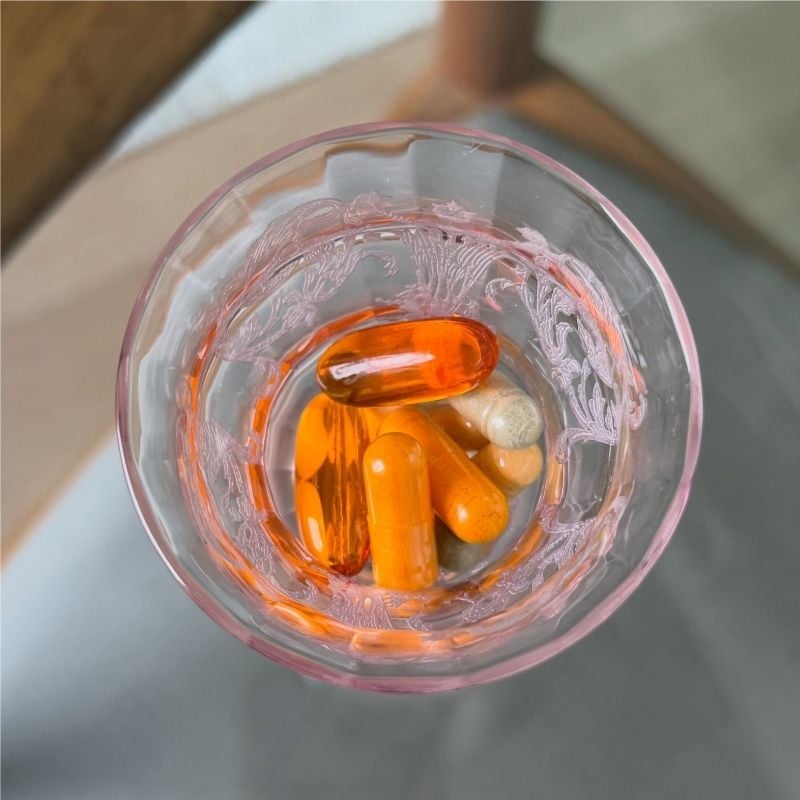
My two favorites are ashwagandha and holy basil. Adaptogens help your body adapt to stress and become more resilient to physical and emotional stress.
Ashwagandha especially helped me tremendously. It reduced my puffy cortisol face and quieted the overthinking noises in my head.
Usually, little things would stress me out, but these days, I’m like, “I can’t be bothered with this,” or I just feel indifferent. I’m super calm now; literally, nothing bothers me.
All those times I spent dwelling on a thought or replaying events over and over again? Not anymore
I started noticing the effects of ashwagandha by the third week of using it, and even my sleep quality improved too.
Other types of adaptogens include maca root, ginseng, cordyceps, rhodiola rosea, etc. See your doctor before getting started on any of these supplements.
15. Learn To Say No

Credit: simplifiedandthriving
I get it, okay? A lot of us have been raised to be people-pleasers. As women, we’ve been told that our worth depends on people’s approval and that we have to earn it.
And so, we take whatever people dish out, stay in situations that don’t serve us, bend over backwards to accommodate everyone, and endure people and activities that drain us.
Even on holidays and special occasions, we stay in the kitchen cooking multiple dishes, serving everyone, and working until exhaustion, only to crash into our beds. Before you know it, Christmas is over.
I’m going to hold your hands while I say this: you only live once. Tomorrow is not guaranteed. You don’t have to suffer, and you don’t have to endure because, guess what? You might die, and you know what happens? Everybody, I mean EVERYBODY, is going to move on.
The sun is going to rise, the sun is going to set, January will become February, businesses will keep running, the clock will keep ticking, and the world is going to continue as if nothing happened.
So, prioritize yourself. Say no to environments, situations, and people that drain you.
Your family is toxic? Cut them off. Your friends are fake? Let them go. Work is toxic? Get another job or start a side hustle and quit. Is your boyfriend mean to you? Break up. And if he’s your husband? Divorce, babes, divorce.
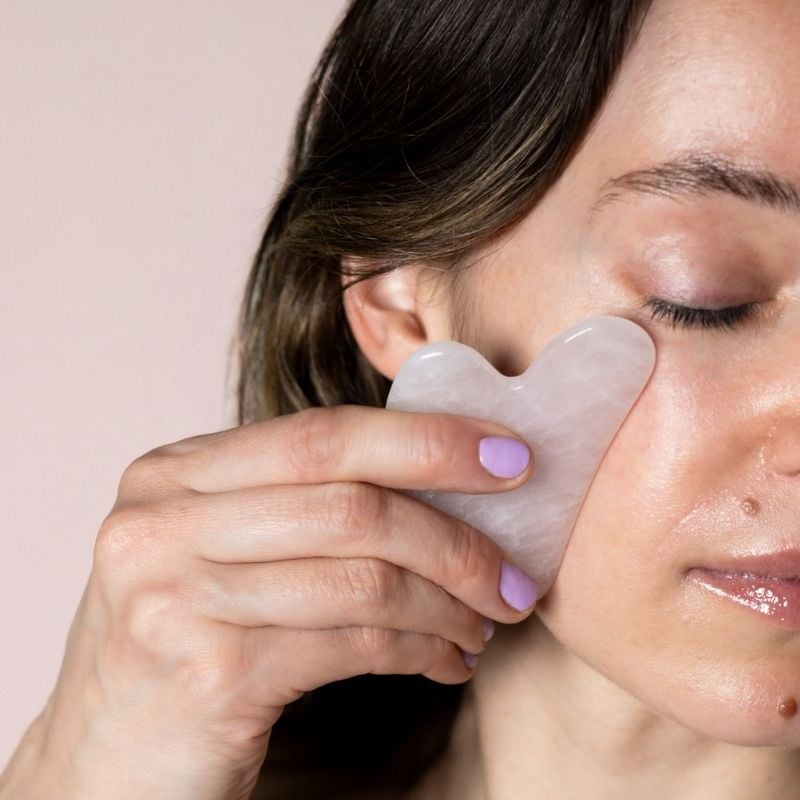
16. Try gentle self-massage or use a gua sha tool as part of a relaxing self-care routine.
Credit: jogujucz
If you are struggling with cortisol face and your face looks puffy, especially when you wake up in the morning, let me put you on to a few things that will help with the puffiness.
First, let’s talk about facial massage and gua sha. These have become popular in skincare routines because they help reduce the appearance of facial puffiness by encouraging fluid movement beneath the skin.
You can use your fingers or a gua sha tool to gently massage your face, moving outward toward your ears and then down the sides of your neck. Please be gentle with your skin.
You don’t need to press hard or drag the tool across your face like you are trying to scrape something off. It is skin, not a rug.
Use a little facial oil or moisturizer to help the tool glide smoothly, and always start with clean hands and a clean tool.
Another thing you can try is a cold compress. Applying something cool to your face for a few minutes reduces puffiness, especially around your eyes.
You can use a clean, cool washcloth or a chilled facial roller. Avoid placing ice directly on your skin, as this can cause irritation or cold injury.
17. Get lots of rest

Credit: aniajarecka_
You are not a rock, so please stop overworking your body. Give it the rest it needs.
I know we are all trying to make this money, pay our bills, take care of our loved ones, build our careers, and secure the bag, but babes, take a break. You cannot keep pouring from an empty cup and expect yourself to function at 100% every single day.
Take your work leave, enjoy your weekends, have your Sunday reset routines, go on staycations or vacations, or simply stay home and watch your favorite movie.
Have your self-care night routines, book a spa date, go on a solo date, engage in your hobbies or find new ones, make your favorite meal, and actually sit down to enjoy it.
You don’t always have to be productive. You don’t have to turn every free moment into an opportunity to work, hustle, or achieve something. Sometimes, you just need to do absolutely nothing, and that’s okay.
Getting enough rest is important for your physical and mental well-being. Chronic stress and not getting enough sleep can affect your body’s normal cortisol rhythms, so giving yourself time to recover really matters.
And please, stop feeling guilty about resting. You don’t have to wait until you are completely burned out, falling sick, or crying over the smallest inconvenience before you allow yourself to slow down.
Rest is not laziness, babes. You deserve to enjoy the life you’re working so hard to build.
So, take that break, log off when you need to, and give yourself permission to breathe.